Málaga province plants more trees against heat. Marbella leads on green space per resident
A SUR in English survey of local authorities finds tree cover rising across Málaga province, with Marbella offering the most green space per inhabitant and Málaga city the most trees.
By Costa del Sol Journal Newsroom · · AI-assisted
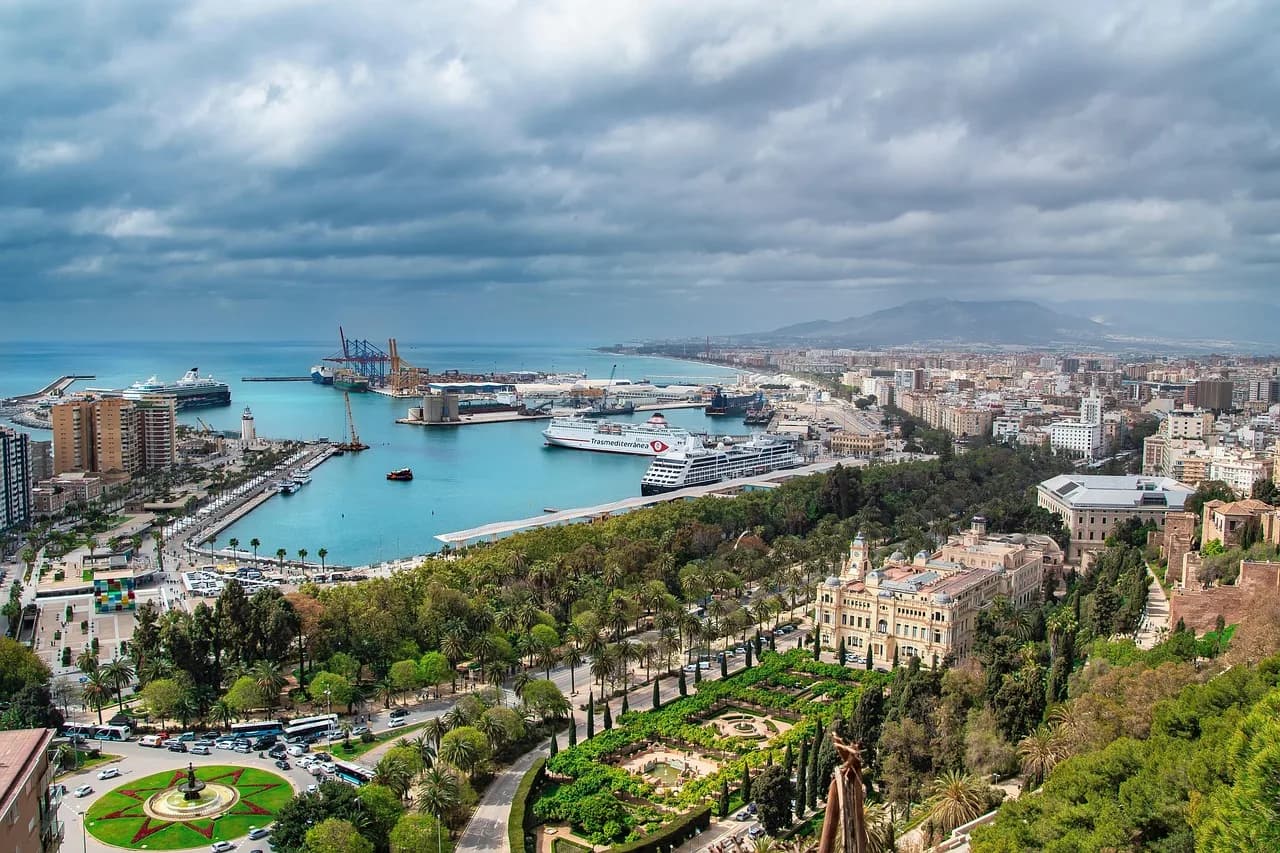
Málaga province's main councils are putting more money into tree planting and maintenance as summers get hotter, according to a survey by SUR in English. The newspaper asked each local authority about its tree cover. Marbella came out as the "greenest" city, while Málaga city has the most urban trees.
Key facts
- Málaga city: 112,200 urban trees, according to city council data, with growth of almost 75 per cent between 2017 and 2026 from a low starting point.
- Marbella: 29.7 square metres of green space per inhabitant, the best ratio in the province, against 13.4 in Málaga city.
- Estepona: more than 9,000 trees added since 2021, a 57 per cent rise and the biggest five-year growth, according to the survey.
- Parks area: the AMJA gardening association says the area of parks and gardens in six municipalities has grown 42 per cent since 2020.
- Heat outlook: the AdapteCCa.es platform projects heatwaves of 30 days in 2030, 40 in 2040 and 51 in 2050 in Málaga.
Who is planting what
SUR in English reports that Marbella, Mijas, Rincón de la Victoria and Málaga have seen the biggest increases in tree cover in recent years. Even so, Málaga city still falls short of the per-capita ratio recommended by the EU, the paper says.
Over the last five years Estepona leads on growth, followed by Marbella with about 4,000 trees and Rincón de la Victoria with 1,642 (up 54 per cent). Mijas has raised its tree population by 36 per cent.
In Málaga city the census rose 3.7 per cent between October 2024 and June 2026, from 108,000 to 112,000 trees. The city council says 9,684 trees were planted over the last seven planting campaigns.
Marbella and the big parks
Marbella's 29.7 square metres per inhabitant compares with 26.7 in Vitoria, 15.7 in Madrid and 11.2 in Seville, according to municipal data cited by the paper. Its annual maintenance budget is around 18.5 million euros.
More than 4,400 trees have been planted there in five years, including palms, jacarandas, ceibas and several pines. Completed projects include the 38,000-square-metre Parque del Mediterráneo in El Pinillo and the reforestation of 7,000 square metres of the Golden Mile.
The largest scheme on the coast is the Gran Parque de Mijas, described as the largest urban green space in Andalucía, where 3,000 trees and 20,000 shrubs have been planted. In Málaga city, Campamento Benítez (28 hectares) is due to have 1,000 trees and 43,000 shrubs. Play-area refurbishments are also under way: 40 announced in Málaga, 17 in Estepona and 16 in Rincón.
Criticism and safety concerns
Not everyone agrees the city is doing enough. Enrique Salvo, director of the University of Málaga's Chair in Climate Change, ranks Málaga city as the worst in the region for relative green space, behind Marbella, Benalmádena and Torremolinos. He says residents are consequently more exposed to sunlight, noise and pollution.
The community group Málaga por la regeneración says its solar-radiation analysis found streets such as Héroe de Sostoa get over 11 hours of direct sun a day. The group says: "Walking or cycling around Malaga during the warmer months has become a test of endurance for local residents, older people and children."
Large branches fell in the city four times in one week between August and September. The city council has since launched an urgent inspection programme, according to SUR in English.
What it means for residents
More shade is likely to be most noticeable where new parks open, but the survey suggests gaps remain between municipalities. Residents can check tree and green-space plans with their own town hall.
Sources
- Going green: Malaga and the Costa del Sol plant more trees to combat the heat · SUR in English: Malaga