Málaga wants to create its own technology. Sun&Tech debate calls for local IP
At Sun&Tech Málaga, local tech and public-sector leaders said the city must move from attracting multinationals to creating its own technology and intellectual property, according to Diario Sur.
By Costa del Sol Journal Newsroom · · AI-assisted
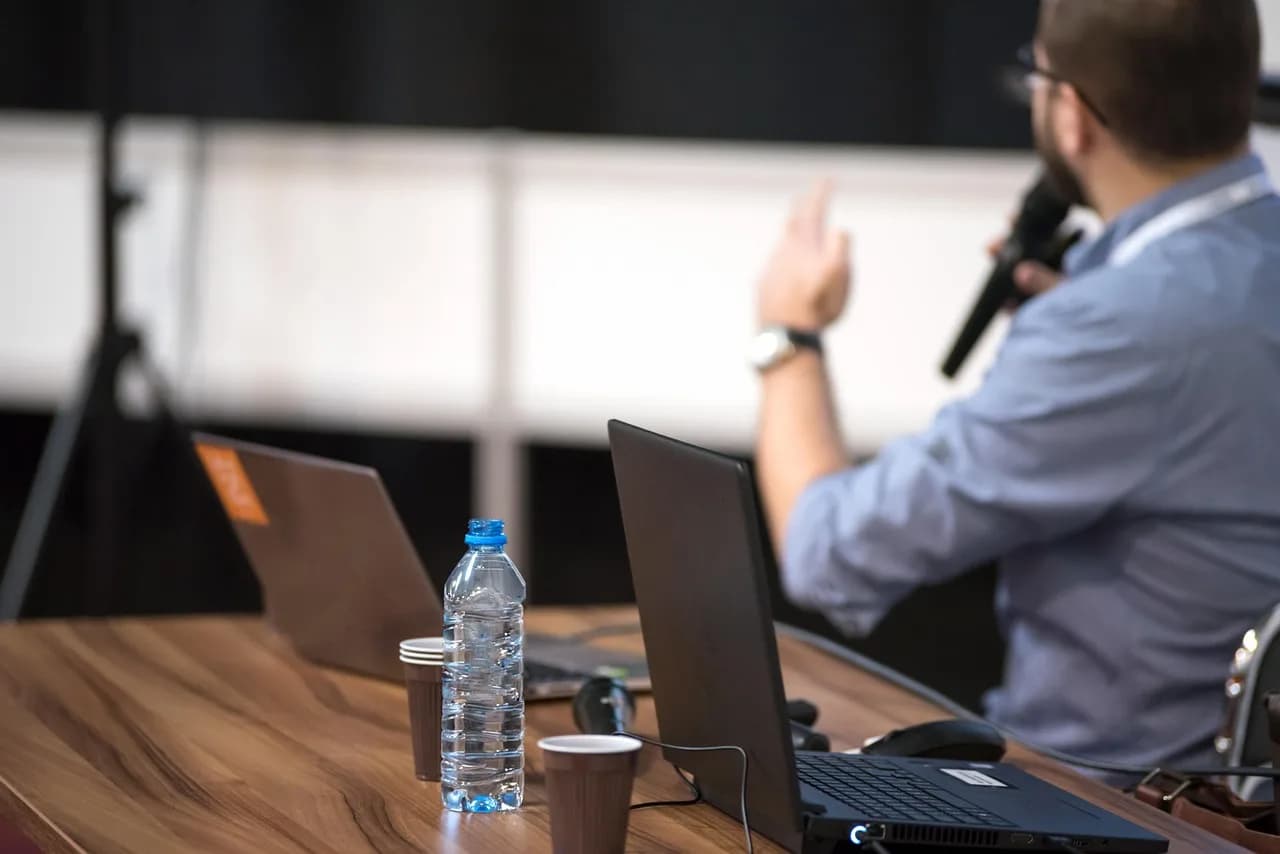
Málaga's technology sector now faces the challenge of moving from attracting multinational companies to creating its own technology and intellectual property. That was the central idea of a round-table at the sixth Sun&Tech Málaga by Alhambra Venture, held on Wednesday at the Palacio de Ferias, according to Diario Sur and SUR in English. It matters to residents, investors and entrepreneurs because it signals where the local tech ecosystem wants to go next.
Key facts
- Event: the sixth Sun&Tech Málaga by Alhambra Venture, which Diario Sur describes as a meeting of startups, investment and technology.
- Central theme: a shift from attracting multinationals to creating homegrown technology and intellectual property.
- Four focus areas: artificial intelligence, cybersecurity, microelectronics and quantum computing.
- Moderator: Javier Recio, editor-in-chief of SUR.
- Partners: Promálaga, the Ayuntamiento de Málaga (town hall) and the Diputación de Málaga (provincial government) are the main partners, according to Diario Sur.
The "Málaga effect"
Felipe Romera, director general of Málaga TechPark, spoke of the "Málaga effect". He said Málaga is the only medium-sized city "in the world" with the chance to consolidate itself in the coming years as a global innovation hub in the four technologies above.
"Málaga is experiencing a special moment, one of great opportunities. It is highly regarded worldwide and enjoys significant global visibility," he said, in SUR in English's translation.
Romera pointed to links with international centres, including the Barcelona Supercomputing Center and one of six global centres resulting from the agreement between Accenture and NVIDIA. He also cited the pull effect in cybersecurity of firms such as Google and Capgemini, the coming arrival of the IMEC microelectronics R&D centre, and the arrival of a quantum computer that he placed among the world's top ten, according to Diario Sur.
Keeping talent and attracting investors
Francis Salas, manager of Promálaga, stressed the need to keep both local and incoming talent through top-level projects. He also called for more investors willing to take financial risks.
Salas said the town hall is carrying out an internal overhaul of its digital systems. The aim is to prepare the administration for the impact of AI on productivity and on processing tasks.
IMEC and the "cathedral effect"
Eduardo Valencia, director general of the Fundación Ricardo Valle de Innovación (Innova IRV), said IMEC should work as a catalyst rather than an end point. He warned against what he called the "cathedral effect", where a single landmark centre operates detached from the local productive and industrial base.
Valencia argued for building a local industrial ecosystem able to generate demand and work with the centre. He said microelectronics could be integrated into sectors such as agriculture, water, defence and cybersecurity.
He also highlighted ICT chairs in Málaga, Granada and Seville, and the semiconductor hub of the Escuela de Organización Industrial (EOI) and Promálaga at the technology park. He also cited a microelectronics startup created from the Ricardo Valle institute and selected by the European Commission for IPCEI projects.
The panel also included Juan Carlos Rubio, vice-rector for transfer and entrepreneurship at the University of Málaga, and Eduardo Peral of the Diputación. Diario Sur's excerpt does not report their remarks.
Google's message
Separately, Juan Antonio Infantes Díaz, director of engineering at Google Threat Intelligence & VirusTotal, told the event that Málaga is the right place for startups. According to Diario Sur, VirusTotal was founded in 2004, bought by Google in 2012 and stayed in Málaga. Google opened its Safety Engineering Center in the city in November 2023.
"Startups, you are in the right place. Google is here to help you," Infantes said, in our translation of his Spanish remarks. He added that Málaga has talent and a market, and he mentioned Google's university chair and a malware reverse-engineering course now in its eighth edition.
Why it matters
The debate reflects an ambition rather than a set of new projects: the reports give no figures or timetable for creating local intellectual property. For people on the coast, it shows where public bodies and companies say jobs and investment could grow, particularly in cybersecurity and microelectronics.
Sources
- Málaga busca dar el salto de atraer tecnología a crear propiedad intelectual como hub global de innovación · Diario Sur
- Google reivindica el potencial tecnológico de Málaga: «Estamos en el sitio adecuado» · Diario Sur
- Malaga province seeks to make the leap from attracting technology to creating intellectual property as global innovation hub · SUR in English: Malaga